
TraderZeex / Equipment
Pumps & Fluid Handling
A useful pump enquiry explains the fluid and the operating duty together.
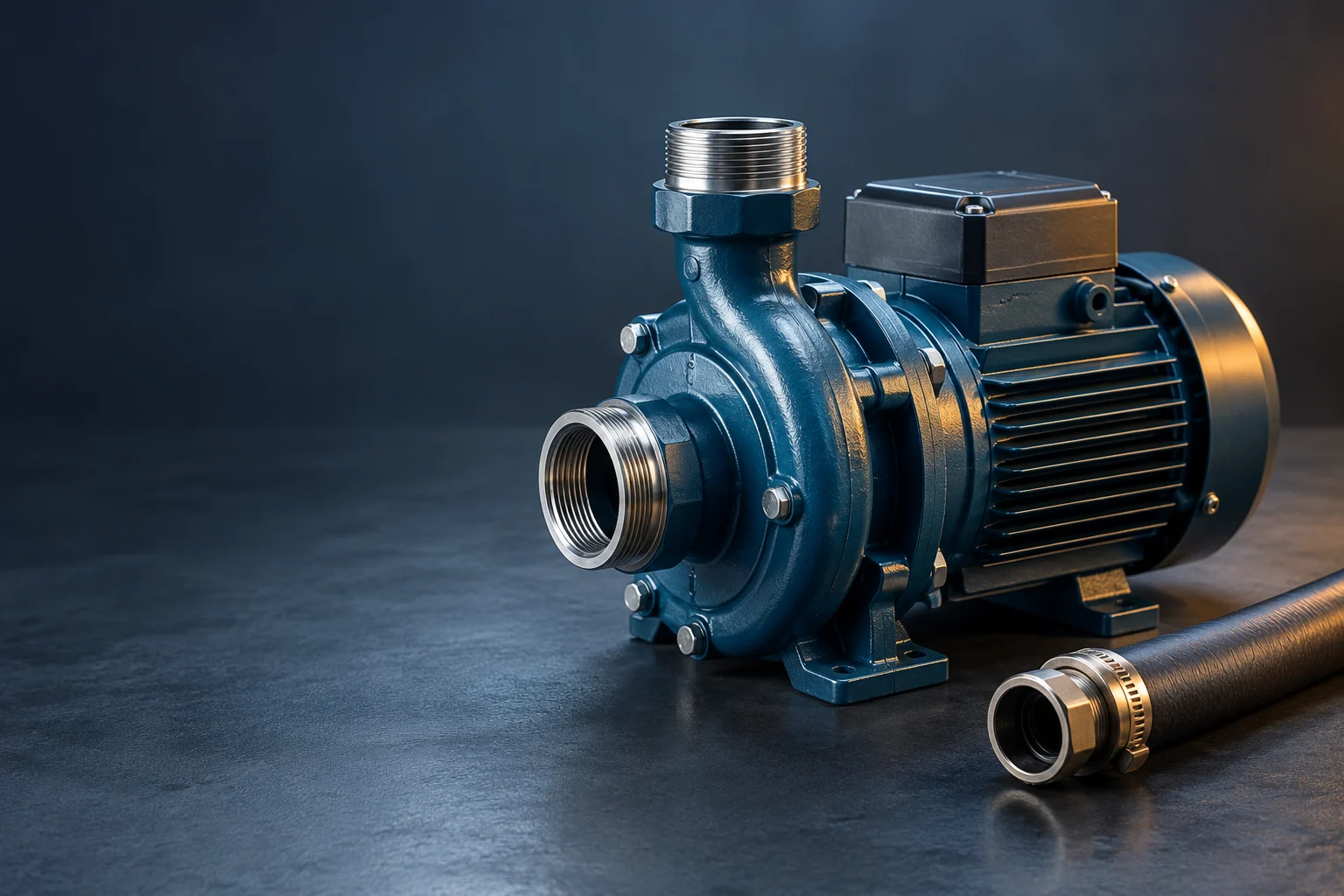
Illustrative imagery. No company-owned facility, stock or personnel is represented.

Duty and installation context
Connect the pump enquiry
to the fluid and duty.
A useful pump enquiry explains the fluid and the operating duty together. Flow, head, fluid properties, temperature and power can narrow the possible products. Hoses and accessories also need the specified service and connection information.
A familiar equipment name can describe products with different duty, capacity and installation requirements. Connect the search to the work the equipment must do.
Begin with the reference information available and identify what still needs clarification. The examples below describe enquiry groups, rather than a statement of stock, brand authorization or guaranteed supply.
Examples of requirements
A clearer product grouping.
Duty-based pump enquiries
State the fluid and the operating conditions defined for the application.
Hoses and fluid-handling accessories
Provide the pump duty and connection details, marking unknowns clearly.
Connection components and identifiable replacement parts
Identify seals, accessories or related items against the exact pump model.
Build a useful specification
Keep the important
details together.
Task and operating requirements
- Fluid and relevant properties
- Required flow and head or system duty
- Temperature and operating pattern
Site, quantity and review details
- Specified material compatibility
- Power and control requirements
- Inlet, outlet and accessory connections
- Existing model and requested technical documents
Review the difference
A possible match
needs an understandable basis.
Can a pump be replaced using motor size alone?
A similar motor size or connection is not proof of equivalent duty. The buyer’s system designer or technical reviewer should assess the proposed option against the application.
What should I include when replacing an existing pump?
For a replacement, include the nameplate and model, the duty if known and any changed operating conditions. An old selection may not fully describe a changed system.
Add the quantity, unit of measure, destination and required date. Mark any uncertain detail clearly. Availability, pricing, lead time and delivery arrangements must be confirmed for the individual enquiry.
Related requirements
Prepare your RFQ
Pumps & Fluid Handling: enquiry essentials.
For pumps & fluid handling, bring fluid and temperature, flow and head and connections and nameplate. Keep the requested item and any proposed change on the same line of your enquiry.
| RFQ field | Information to record |
|---|---|
| Product identity | Fluid and relevant properties |
| Fit / configuration | Required flow and head or system duty |
| Application requirement | Temperature and operating pattern |
| Additional detail | Specified material compatibility |
| Additional detail | Power and control requirements |
| Additional detail | Inlet, outlet and accessory connections |
| Additional detail | Existing model and requested technical documents |
| Missing information | Write “unknown” and attach the available reference; do not infer a rating or approval. |
| Quantity / destination | State the quantity, ordering unit, delivery destination and required date. |
Use the product enquiry guide to organize a multi-item request. Price, availability and delivery terms are confirmed for the individual enquiry.
Start the conversation
A clearer enquiry starts
with the details that matter.
Bring the part reference, drawing or product list you have. Mark the details that still need to be clarified.