
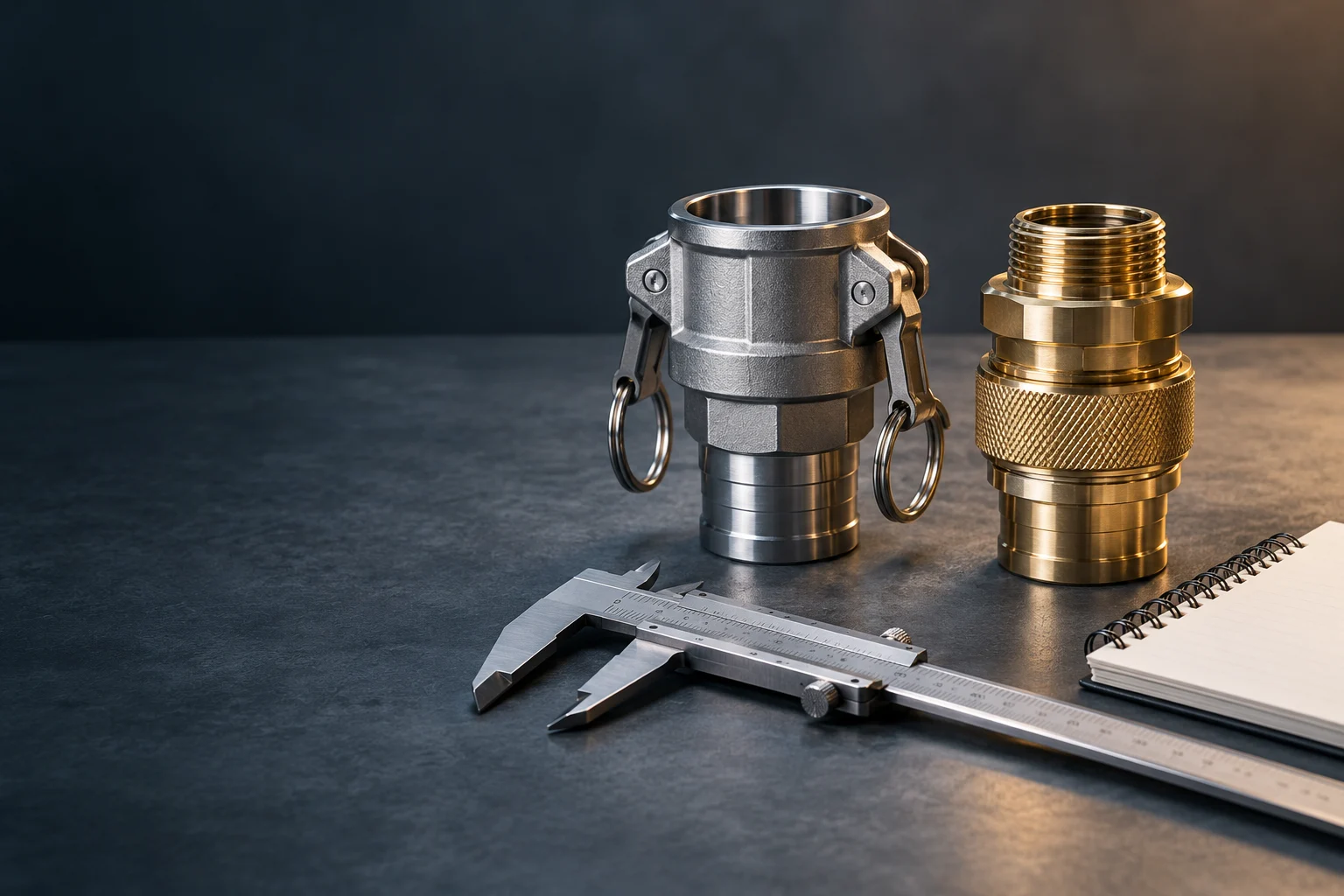
A similar name is only a starting point.
A potential alternative can look close to the requested product while differing in a way that matters to the application. The difference may be a material grade, connection, rating, power requirement, interface or supported function. A useful comparison keeps the original requirement visible beside the proposed option.
Begin with a complete description of the requested item. If that description is incomplete, resolve the missing essentials before deciding which differences are acceptable. An uncertain starting point cannot establish equivalence.
Build the comparison around the application.
- Identity: complete product references and the specific configuration being offered.
- Physical fit: dimensions, mounting, threads, ports and mating interfaces.
- Material and finish: the properties specified for the intended environment.
- Operating requirements: the ratings or functions defined by the buyer.
- Compatibility: the existing equipment, software or system the item must work with.
- Documentation: the current item-specific information required for review.
Record differences plainly.
A short comparison table can have four columns: requirement, requested item, proposed option and open point. Use the open-point column for missing evidence or a decision that still needs approval. An empty cell should not silently become a match.
For a peripheral, the same main connector may not support the same display, power or data functions. For a valve, a matching nominal size may not resolve the connection standard or service rating. These are reasons to ask a focused question, not reasons to assume that every alternative is unsuitable.
Keep technical acceptance with the right reviewer.
The buyer may have project specifications, approved references or qualified personnel responsible for acceptance. Identify that review path before a proposed difference becomes part of an order. A supplier description or general brochure may help explain a product, but it is not automatically evidence that the actual offered item satisfies the requirement.
If a document relates to a product family, check whether it also identifies the relevant model and configuration. Where the application requires particular records, request them at the enquiry stage.
Review commercial details separately.
Product suitability and commercial attractiveness are related decisions, but neither resolves the other. A lower quoted amount does not prove a technical match; a suitable specification does not confirm availability. Review quantity, pack format, lead time and delivery arrangements for the actual proposed item before agreeing the order.
The goal is a comparison the buyer can understand and approve. Clear differences and well-defined open questions are more useful than an unsupported claim of equivalence.
Read our specification review approachExample: record the difference before deciding.
| Review point | Requested | Proposed | Open point |
|---|---|---|---|
| Connection | Required host / interface | Documented proposed interface | Functions still to verify |
| Material or configuration | Exact specified version | Actual offered version | Changed property or missing detail |
| Evidence | Current required document | Document tied to offered item | Approval still needed |
Check functions as well as connector shape.
USB Type-C® identifies a connector; supported data and power capabilities depend on the product implementation. Record the host model and the required functions, then compare the actual product documentation. USB-IF: connector and capability terminology (PDF).
Independent technical reference. This link does not imply a partnership or product certification. USB Type-C® is a registered trademark of USB Implementers Forum.
Prepared by TraderZeex as practical product enquiry guidance. Item selection and acceptance depend on the actual product information and the buyer’s responsible technical review. About the business · Ask about your requirement.